
From $1 to Generational Wealth: A Guide to Investing With Small Amounts
How to start investing with $1: how fractional shares work, what $1 can actually buy, the costs to watch, and how small habits compound over time.

On this page
- What is investing?
- Can You Really Start Investing With $1?
- How Fractional Shares Make $1 Investing Possible
- How Fractional Shares Work on Vantar
- Opening the Investing Habit: What Actually Happens on Vantar
- What Can You Invest in With $1?
- Is Investing $1 Actually Worth It?
- What Should You Consider Before Investing $1?
- Final Thoughts
Every long-term portfolio – including the kind that gets passed down, starts with a first dollar. How to start investing with $1 is simpler than most people expect: pick a stock or ETF, enter a dollar amount, and let fractional shares do the rest.
If you've ever assumed investing is only for people who already have money, or wondered how to start building something you could one day pass on, this is where it begins.
Starting with $1 isn't about turning a small amount into a fortune overnight; it's about making investing more accessible, learning how the market works, and building an investing habit you can grow as your finances allow.
What is investing?
Investing simply means putting your money into an asset to grow its value or generate income over time. This could include stocks, ETFs, bonds, or other investment products. Unlike keeping money in a regular savings account.
Can You Really Start Investing With $1?
Yes, you can start investing with one dollar ($1). Traditionally, investing in stocks meant purchasing at least one whole share. If a company's stock traded at $500 per share, you would need $500 to purchase one share.
Fractional shares changed that.
For example, if a stock costs $100 and your platform, e.g., Vantar, allows fractional investing, a $1 investment could represent 0.01 shares before applicable fees or costs. That lets you invest $1 without needing enough money to buy a full share.
How Fractional Shares Make $1 Investing Possible
What is a Fractional Share?
A fractional share is simply a portion of a whole share. Fractional investing gives investors access to higher-priced securities without requiring them to buy an entire share. For a deeper explanation, see Vantar's guide to What Are Fractional Shares?
A simple $1 example: Imagine a company has a share price of $100.If you invest $1 and your platform supports fractional shares, your investment would represent approximately:
$1 ÷ $300 = 0.0033 shares
If the stock price subsequently changes, the value of your fractional holding changes as well. If the stock rises, your investment could increase in value. If the stock falls, your investment could decrease in value.
Fractional shares make smaller investments possible, but they do not remove investment risk.
How Fractional Shares Work on Vantar
Here's what a fractional purchase actually looks like in the app, using a real Vantar transaction as an example:
See a sample image below of fractional shares of Nvdia bought on Vantar - (stock prices change as the market moves)
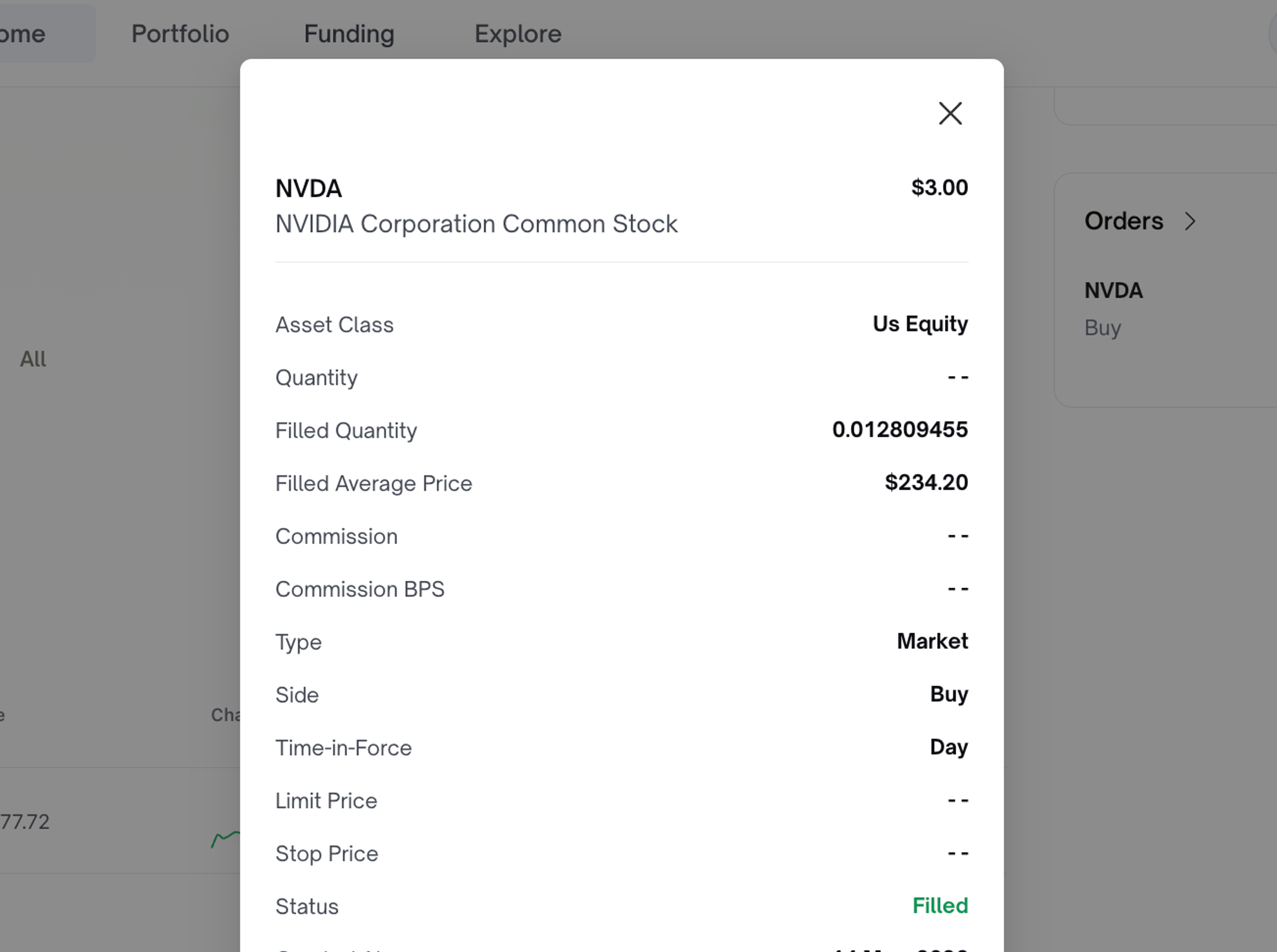
In this transaction, the investor buys a fractional position in Nvidia rather than needing the full share price. Vantar calculates the fraction based on the dollar amount entered, executes the trade at the market price, and shows the resulting fraction of a share in the portfolio, so there’s no manual math.
The math behind it is simple: dollar amount ÷ current share price = shares owned. If Nvidia trades at $201 and you invest $1, you own approximately 0.0050 shares. As the price moves, that fractional position moves with it proportionally, exactly like a whole share would.
The Real Math: What Starting Small Can Build Over Time
Starting small can become more meaningful when you keep investing over time.
For illustration, assume you invest the same amount every month and earn a hypothetical 10% annual return, compounded monthly. These figures do not account for taxes or fees, and actual investment returns can vary significantly from year to year. A 10% return is an assumption for this example, not a guarantee or forecast.
If you invest $1 per week:
- After 1 year: ~$54
- After 3 years: ~$181
- After 5 years: ~$336
- After 20 years: ~$3,300
- After 30 years: ~$9,800
If you invest $5 per week:
- After 1 year: ~$272
- After 3 years: ~$905
- After 5 years: ~$1,678
- After 20 years: ~$16,500
- After 30 years: ~$49,000
If you invest $10 per week:
- After 1 year: ~$545
- After 3 years: ~$1,811
- After 5 years: ~$3,356
- After 20 years: ~$32,900
- After 30 years: ~$98,000
If you invest $30 per month:
- After 1 year: ~$377
- After 3 years: ~$1,253
- After 5 years: ~$2,323
- After 20 years: ~$22,800
- After 30 years: ~$67,800
If you invest $100 per month:
- After 1 year: ~$1,257
- After 3 years: ~$4,178
- After 5 years: ~$7,744
- After 20 years: ~$75,900
- After 30 years: ~226,000
The takeaway isn't that a specific investment will produce these results. It's that regular contributions can add up over time, and compounding can increase the value of an investment as the time horizon grows.
Past performance does not guarantee future results, and investments can lose value.
From Habit to Legacy: How Small Investments Build Toward Generational Wealth
Generational wealth isn’t built by one big move. It usually comes from a habit that continues for decades. Three ideas matter most: consistency, time horizon, and long-term holding.
Consistency matters more than the amount. A $1, $5, or $10 weekly contribution may feel small, but the habit is what compounds. In the example above, $10 a week could grow to roughly $98,000 over 30 years, based on $15,600 of contributions and a hypothetical 10% annual return. Recurring contributions also take the guesswork out of when to invest. Try Auto-invest.
Time is the biggest lever. Compounding rewards patience. In the same example, $10 a week reaches about $3,356 after 5 years, about $32,900 after 20, and about $98,000 after 30. Most of the growth in the later years comes from earlier gains earning returns of their own, not from new contributions. That’s why starting early, even with a small amount, can matter more than starting later with a larger one.
Long-term holding keeps compounding working. Markets rise and fall, and frequent buying and selling can add costs and interrupt compounding. Investors building for the long term often focus on diversified investments, such as ETFs, and on staying invested through market ups and downs. Only invest money you won’t need in the near term.
Opening the Investing Habit: What Actually Happens on Vantar
If you're ready to start investing, the process can be straightforward using a platform like Vantar.
1. Sign up and verify your identity
First, check whether the investment platform allows fractional shares and whether its minimum investment amount is $1. Vantar lets you do this seamlessly. Vantar's onboarding is built for this from the ground up: fractional investing and a $1 minimum aren't an add-on feature; they're the default way the platform works.

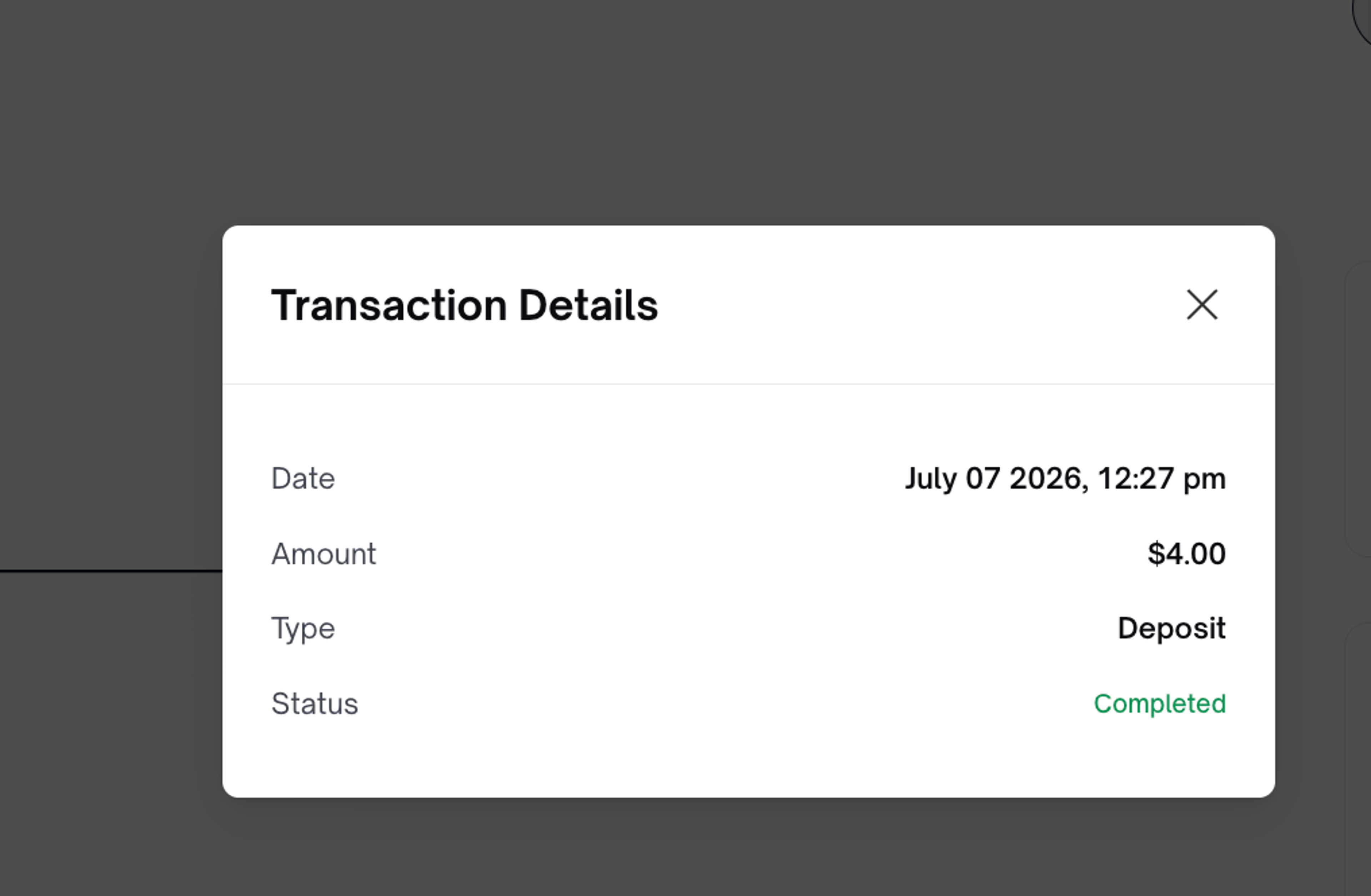
2. Fund your account/Deposit Your Money
Add the amount you want to invest to your account. Deposit times depend on your bank and transfer method. Check the move money page to learn more.
3. Browse and Research What You Want to Invest In
Having $1 to invest doesn't mean you should skip the research.
Before buying a stock or ETF, understand what you're investing in.
For an individual stock, you might research:
- What the company does
- Its industry
- Revenue and earnings
- Financial position
- Potential risks
- How its valuation compares with the business
You can learn more about interpreting stock information in Vantar's How to Read a Stock Price guide.
You could also consider ETFs, which can hold multiple investments and may provide broader exposure than investing in a single company. The right choice depends on your goals, risk tolerance, and investment strategy. You can go through the detailed guide on what an ETF is.
On Vantar, you can easily search for the stocks or ETFs you want once you have created your account, you get to choose from 12,000+ US stocks and ETfs.
4. Enter a dollar amount, not a share count
This is the core mechanical difference from traditional investing: you decide how much to spend, and Vantar calculates the resulting fraction of a share automatically.
5. Keep Learning and Consider Investing Regularly
Your first $1 is only the beginning. Instead of thinking about the $1 as the investment itself, think of it as your starting point for learning how markets work. If your financial situation allows, you can consider making additional investments over time.
The amount doesn't have to be the same every time. What matters is understanding what you're investing in and making decisions that fit your financial circumstances.
What Can You Invest in With $1?
On Vantar, $1 can go toward any of 12,000+ eligible US stocks and ETFs, or into Vantar's High Yield Cash option.
- Individual stocks - Invest in shares of companies like Apple, Tesla, Robinhood, Uber, and others, from Vantar's full range of 12,000+ stocks and ETFs.
- ETFs - ETFs give you exposure to a collection of securities through a single investment, and they're a fully supported asset class on Vantar. To see how they compare with mutual funds, read ETFs vs. Mutual Funds: Which Gives You More Control?.
- High Yield Cash - Beyond stocks and ETFs, for money you’d rather not have fully invested in the market, Vantar offers High Yield Cash with an APY of up to 3.5%
Commission: Vantar currently charges $0 commission on stocks and ETFs, but for international investors outside the US, a $0.8 fee may apply.
Need more tips? You can access more learning guides to help with your investing goals.
Is Investing $1 Actually Worth It?
Your first $1 investment on Vantar can help you understand:
- How investment orders work
- How stock prices move
- How gains and losses appear in a portfolio
- How market volatility feels in practice
- How different investments behave
- How to research an investment before buying it
Starting small can also remove the psychological barrier that comes with thinking you need a large amount of money to begin, which is why Vantar offers a low threshold to begin your investing journey with.
Investing $1, can also help you build a habit by leveraging recurring investing. You can build this habit leveraging Vantar’s auto-invest features.
What Should You Consider Before Investing $1?
Even a small investment deserves some thought. Below are some things to consider before investing $1.
- Fees: Vantar charges $0 commission on US stocks and ETFs.
- Investment risk: Fractional shares carry the same market risk as whole shares - a decline in the underlying stock affects your fractional position proportionally.
- Fractional-share limitations: voting rights and certain corporate actions can differ for fractional positions; check Vantar's specific policy for the assets you're considering.
- Your time horizon: Investing works over months, years, and decades; money you'll need soon shouldn't be treated the same way as money earmarked for the long term.
Final Thoughts
You don’t necessarily need a large amount of money to learn how investing works; on Vantar, you can begin your investing journey with $1. That $1 invested can give you practical experience buying an investment, tracking its value, and understanding how markets behave.
But the amount you start with is only one part of the picture.
What matters more is understanding what you're investing in, knowing the risks, keeping costs in mind, and making investment decisions that fit your financial goals and circumstances.
Starting with $1 won't make you wealthy overnight. But it can be the first step toward becoming a more informed investor.
Ready to start investing? You can explore the Vantar Trade page.
Frequently asked questions
Can I really start investing with $1?
Yes - $1 is Vantar's minimum for fractional purchases across its 12,000+ eligible US stocks and ETFs.
What can I invest in with $1?
On Vantar, a fraction of any eligible stock or ETF, including high-priced ones, since you buy a dollar amount rather than a whole share.
Is investing $1 worth it?
Yes, the value is in building the habit: the real returns come from consistency over years, not the size of any single contribution.
How do fractional shares work?
A fractional share lets you invest a dollar amount instead of buying a whole share. You choose how much to spend, such as $1, and Vantar calculates the portion of a share you own. At a share price of $100, $1 buys approximately 0.01 shares, and its value rises or falls with the stock.
How do I fund my first investment from outside the US?
You can fund your first investment from outside the US by signing up on Vantar and completing the verification steps, which will enable you to fund in your local currency to begin your investing journey.
Keep reading
All Learn articles
Stocks vs. ETFs for beginners: how each works, and how to start with either
A stock is one company. An ETF is a basket. Here's how each works, what's different, and how to start with a small amount.
 Vantar
Market order vs. limit order: what's the difference?
A market order fills fast; a limit order sets your price. A breakdown on how each works, when to use it, and the trade-offs.
Vantar
What are Fractional Shares? A Beginner's Guide
Learn what fractional shares are, how they work, and why some investors use them to access higher-priced stocks.
Vantar