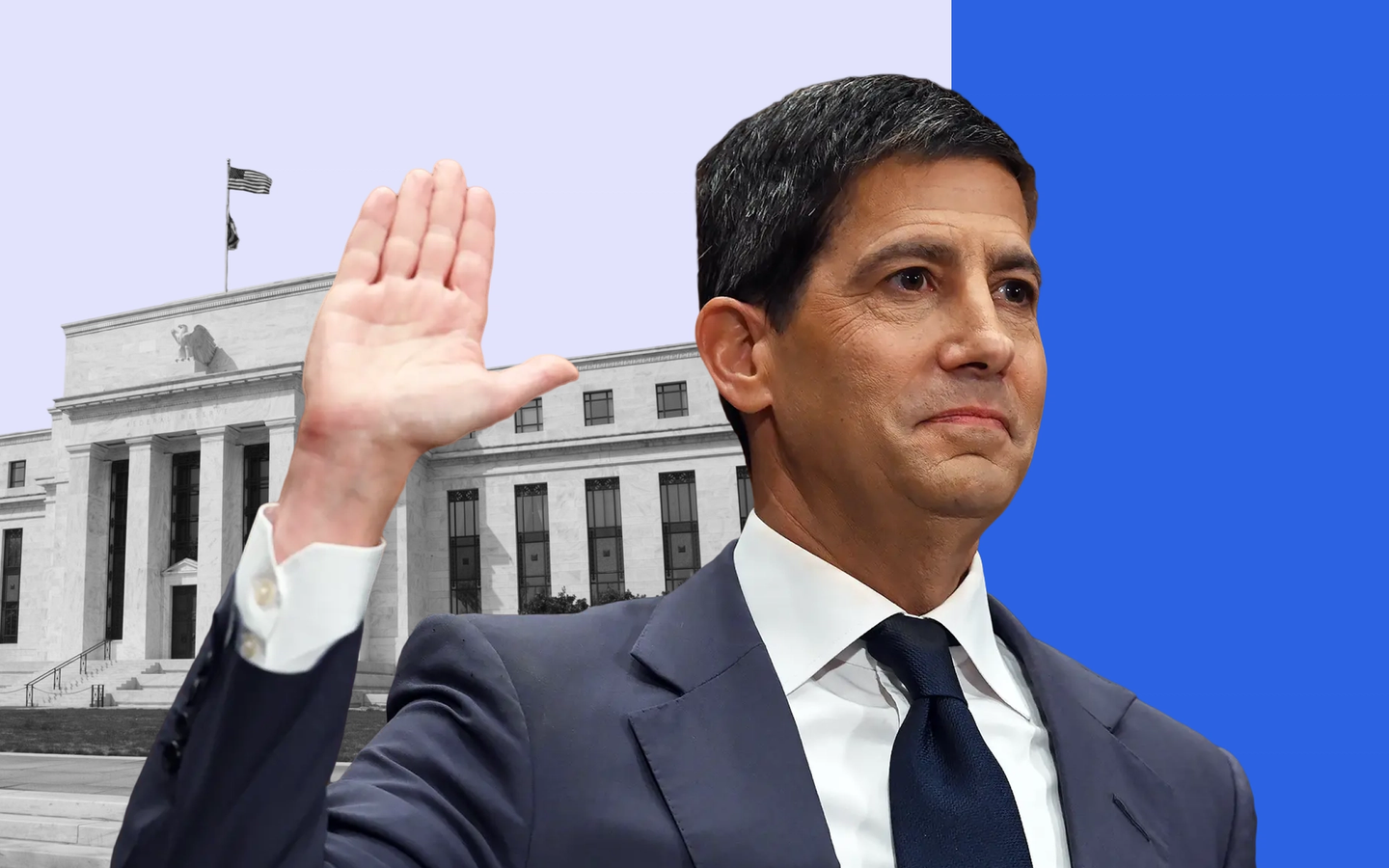
Inside Kevin Warsh’s First US Fed Meeting June 2026: Key Takeaways for Investors
Explore the key takeaways from Kevin Warsh's first meeting as US Fed Chair, including the interest rate decision, inflation outlook, and what it may mean for investors.

Summary
Explore the key takeaways from Kevin Warsh's first meeting as US Fed Chair, including the interest rate decision, inflation outlook, and what it may mean for investors.
Kevin Warsh’s first Federal Reserve meeting as Chair in June 2026 marked a notable shift in tone and policy framing, even as the Federal Open Market Committee (FOMC) kept interest rates unchanged at 3.5%–3.75%. While the decision itself was widely expected, attention centered on how the Fed communicated its outlook and priorities under new leadership. The decision to maintain rates for a fourth-straight meeting was supported by all 12 members of the Federal Open Market Committee, but new quarterly projections by some Fed officials anticipate a rate hike by the end of the year.
A key theme from the meeting was the renewed emphasis on price stability. Warsh reaffirmed the Federal Reserve’s commitment to its 2% inflation target, framing it as a clear, unified objective among policymakers. This reinforced a more inflation-focused posture, with limited indication that near-term rate cuts are currently under consideration.
The policy outlook, however, remains data-dependent. Several policymakers signaled that while no immediate changes to rates are planned, the risk of persistent inflation continues to shape discussions. This keeps the door open to further tightening if inflation proves more stubborn than expected, while also limiting expectations for near-term easing.
Beyond rates, a major focus of Warsh’s debut meeting was the Fed signaling a more restrained approach to forward guidance, placing less emphasis on projecting future policy paths and more weight on incoming economic data. This shift suggests a move away from detailed signaling toward a more flexible, real-time decision-making framework.
To support this broader shift, Warsh introduced internal working groups focused on five key areas: inflation dynamics, labor market conditions, productivity, communication strategy, and data usage. These groups are expected to review how the Fed interprets economic conditions and communicates decisions, signaling an institutional reassessment rather than a narrow policy adjustment.
The meeting also touched on the Federal Reserve’s balance sheet, with policymakers acknowledging the importance of reassessing asset holdings over time. While no immediate changes were announced, the discussion suggests that balance sheet strategy will remain part of ongoing policy deliberations as the Fed evaluates liquidity conditions and the transmission of monetary policy.
Market reaction reflected a cautious interpretation of the meeting. Equities moved lower while Treasury yields rose as investors reassessed expectations toward a more hawkish policy path. The shift in tone introduced some uncertainty around how long restrictive conditions may remain in place.
Read Also: Anthropic filing for IPO Explained
Overall, Warsh’s first meeting as Fed Chair signals a Federal Reserve entering a more inflation-focused, structurally reflective phase. While the policy rate remained unchanged, the combination of a tighter communication stance and internal policy reviews suggests a broader recalibration of how the Fed operates and communicates.
About Kevin Warsh
Kevin Warsh is the Chair of the US Federal Reserve. He previously served as a member of the Federal Reserve Board of Governors from 2006 to 2011, during which he participated in monetary policy decisions in response to the global financial crisis, including liquidity support and financial system stabilization measures.
Prior to returning to the Fed in a leadership role, Warsh held positions across public policy and the private sector, focusing on economic policy, central banking frameworks, and financial market structure. He has been widely associated with a strong emphasis on inflation discipline and institutional credibility.
His approach to monetary policy is often characterized as data-dependent and institutionally focused, with a strong emphasis on maintaining price stability and reinforcing the long-term independence and effectiveness of the Federal Reserve.
Community
Keep up and stay connected with daily updates; join the Vantar community here.